End-of-line automation
Automatic bagging, palletizing and hooding lines
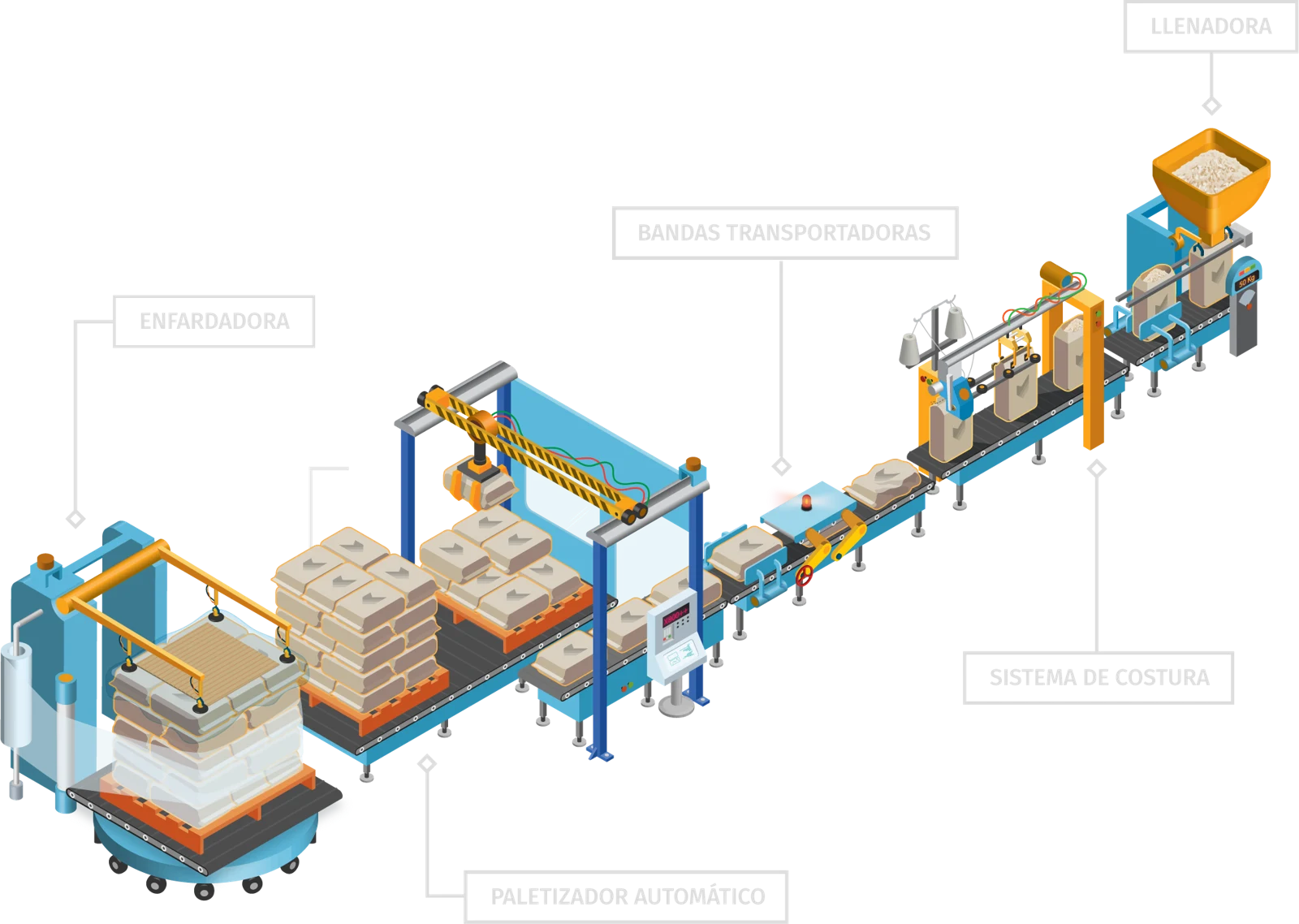
For plants that need hundreds of bags per hour with fewer staff: automatic bagger, palletizer and stretch hooder, from European and American manufacturers that we integrate into a single line. We design the project with you and support it in Costa Rica.
How it works
Three machines, one line
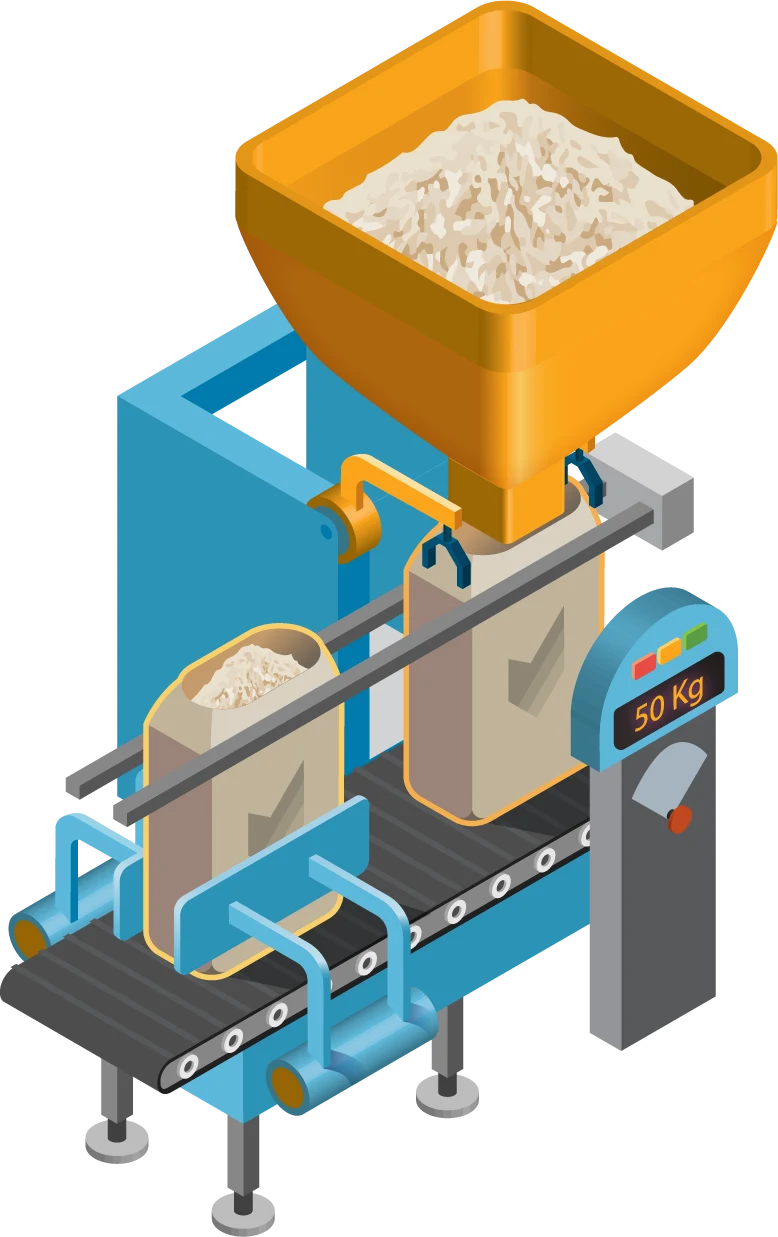
Automatic bagger
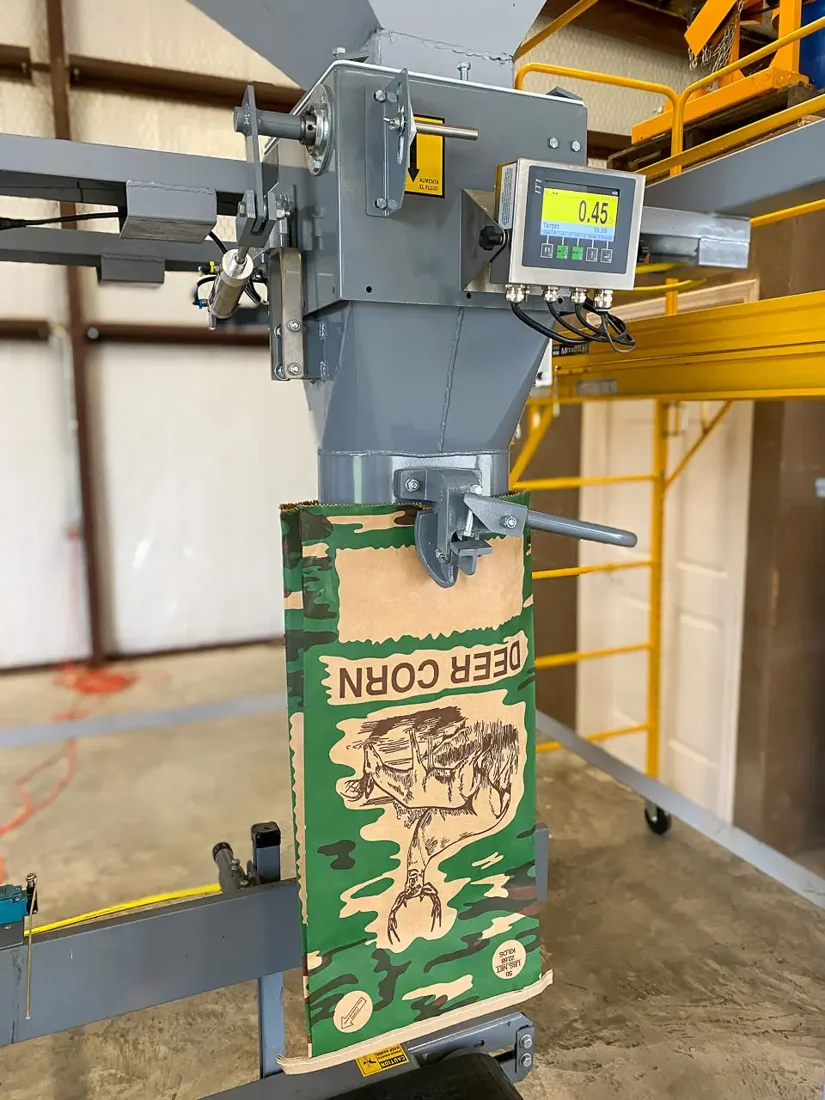
Picks the empty bag, opens it, fills it by weight and closes it: sewing, sealing, pinch or folded with tape.
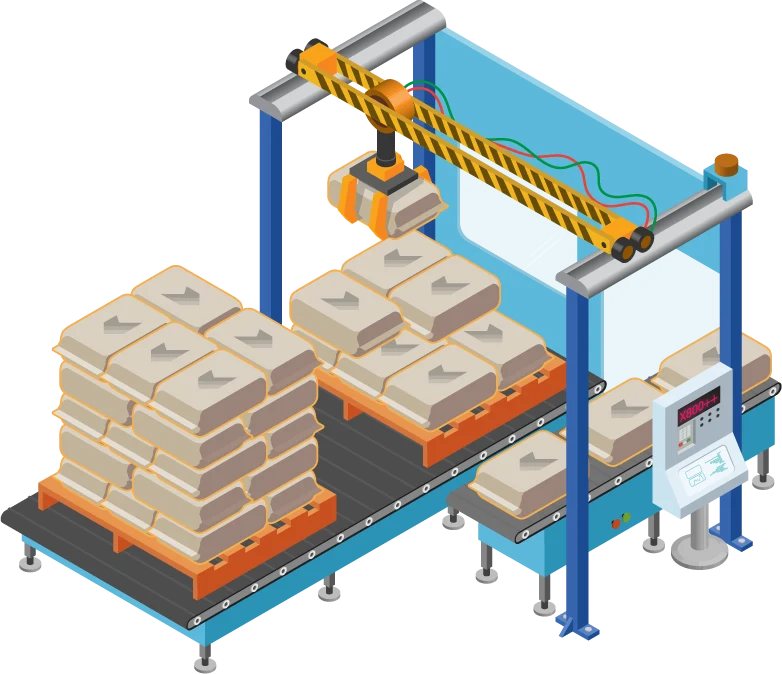
Bag palletizer
Turns, arranges and presses each layer to build even, stable pallets, with the pattern you set on the screen.
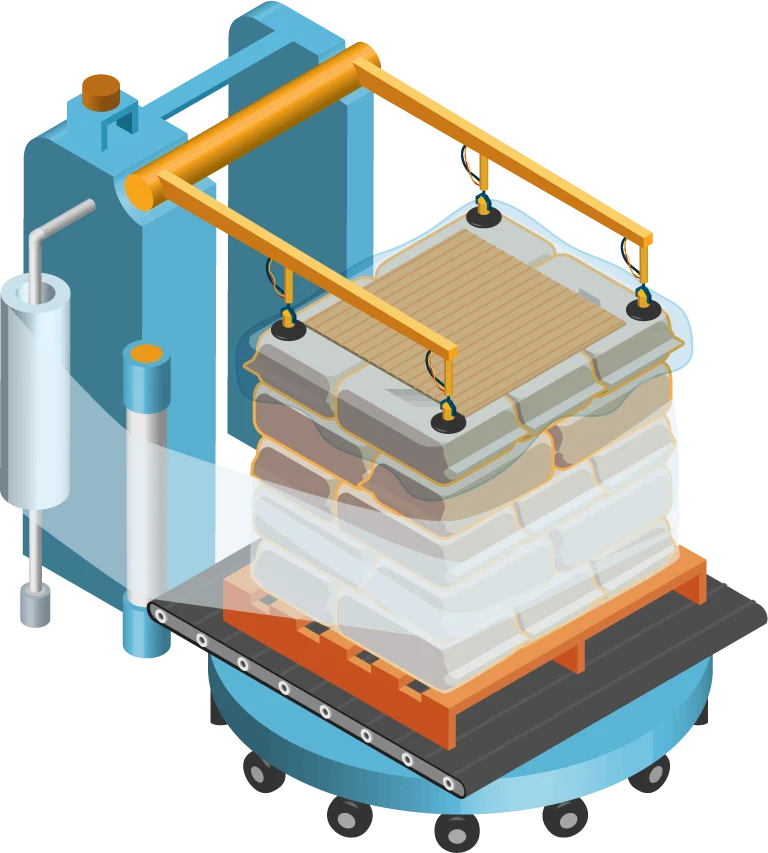
Stretch hooder
Covers the pallet with a waterproof elastic hood, ready for outdoor storage or shipping.
Automatic bagging
Automatic open-mouth bagger
Fills and closes 5 to 50 kg open-mouth bags without an operator at the filling station. Configured for your product: horizontal auger, gravity, belt or vibratory feed, gross or net weight.
Specifications
- Up to 600 bags per hour per line
- Gross or net weighing, legal-for-trade approvable
- Optional dual weighing for higher capacity
- Quick format change
- Ethernet and Wi-Fi connection
Bag closing
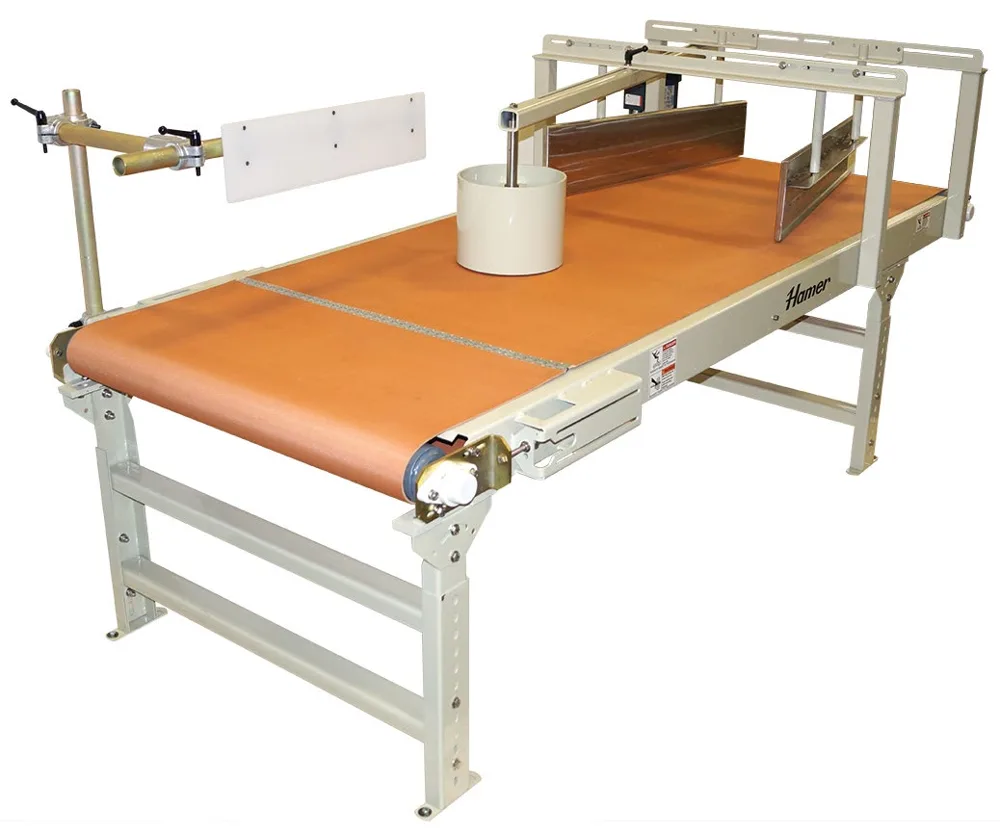
- Single stitch, fold-over or crepe tape
- Heat sealing or pinch
- Folded and taped
- Height-adjustable closing conveyor
- Which closure does your product need? See the guide →
| Typical value | Reference range |
|---|---|
| Bags | Open mouth, with or without gusset; tubular film |
| Materials | Polyethylene, paper (with PE liner) and laminated polypropylene |
| Empty bag length | 600 to 1,000 mm |
| Empty bag width | 400 to 570 mm |
| Gusset | 40 to 90 mm |
| Footprint of a line with sewing | Approx. 6.4 × 3.2 m |
| Options | De-aeration, gas flushing, sampling, metal detector, checkweigher, printing and labeling |
Reference values for an automatic bagger with single-stitch or crepe tape sewing; they vary by manufacturer and model. Each project is sized for the plant's space and output.
Reference footprint
An automatic bagger with sewing takes up approx. 6.4 × 3.2 m. With a palletizer and stretch hooder, reserve space for the pallet and its exit.
Compressed air
The line needs dry, stable air; we size consumption with the factory according to the configuration.
Hooding is not wrapping
A stretch hood places an elastic hood closed at the top; a stretch wrapper wraps film in a spiral. The hood protects better against water.
Palletizing
Layer or robotic bag palletizer
It builds even, stable pallets layer by layer. On the layer palletizer, a turning head positions each bag and each layer is pressed separately; the robotic palletizer (articulated arm) takes up less space and can serve more than one line.
Specifications
- Bags from 1 to 50 kg; also boxes (optional)
- Pallets up to 2,500 mm high
- Stacking patterns editable on screen
- Each layer pressed for stable pallets
- Quick format change
Options
- Stacking box for pallets without overhang
- Empty pallet and slip sheet dispensers
- Palletizing robot for several lines or tight spaces
- Semi-automatic version
Stretch hooding and wrapping
Stretch hooder or stretch wrapper
It covers the pallet with an elastic hood closed at the top: it protects the product from water and dust and allows outdoor storage, using less film than traditional stretch wrapping. For lower output, an automatic stretch wrapper wraps the pallet with film in a spiral.
Specifications
- Less film consumption than stretch wrapping
- Detects the height and width of each pallet
- Maximum load 1,500 kg
- Pallets up to 2,500 mm high
- Waterproof hood, suitable for outdoors
For which products
- Bags and bulk bags
- Boxes and bales
- Tiles, stone and construction materials
- Insulation material and bulky products
For which products
Industries that use these lines
One project, one point of contact
An automatic line is designed around your plant's actual space, your product and your bag formats. Seproma coordinates the project with the factory, translates the engineering and remains your technical contact in Costa Rica.
- Survey of the plant, product and formats
- Technical and commercial proposal in phases
- Factory testing and on-site installation
- Training for operators and technicians
- Local parts and service
Frequently asked questions
How many bags per hour can an automatic line produce?+
An automatic bagger reaches about 600 bags per hour. For 1,200 bags per hour, two lines or a dual-weighing configuration are used, depending on the product.
Can automation be done in stages?+
Yes. It is common to start with the bagger and the sewing system and add the palletizer and the stretch hooder in a second phase. We design the line with those stages in mind.
Do I need to hood my pallets?+
Not always. A stretch hooder makes sense when the product is stored outdoors or shipped long distances. If the pallet stays under a roof and is stacked, good palletizing and slip sheets between layers are sometimes enough.
What information do you need to quote?+
Product and bulk density; empty and filled bag dimensions (length, width, gusset) and material; weight per bag; bags per hour; pallet format; available space, ideally a layout drawing; and plant voltage.
Tell us about your automation project
With your product, bag formats and hourly output we prepare a technical and commercial proposal.
Brands we represent





Seproma is the sole authorized Hamer-Fischbein representative in Costa Rica. Learn about the company.